Beat Stitch Tiles Dance Music
- 4.3
- Rating
- 50.00K
- Installs
- Free
- Price
 Analysis by App-foxy
Beat Stitch Tiles Dance Music is the kind of rhythm game I reach for when I want a quick burst of concentration rather than a long, complicated session. Its central idea is easy to understand: follow the musical flow, tap the moving tiles, and try to stay in time while a cheerful blue alien gives the game its personality. That simplicity is its greatest strength, but it also sets a clear limit. This is a focused casual music game, not a full rhythm-training platform or a deep arcade campaign.
After spending time with it, my main impression is that the game works best as a short, repeatable challenge. The controls are approachable enough for someone who rarely plays mobile games, while the timing demands give experienced players a reason to replay a track and chase a cleaner run. I would recommend it to anyone who enjoys music-led tapping games, especially if cute presentation matters as much as technical depth. I would not choose it for a large song library, extensive customization, or a story-driven experience.
How the blue alien rhythm challenge feels in practice
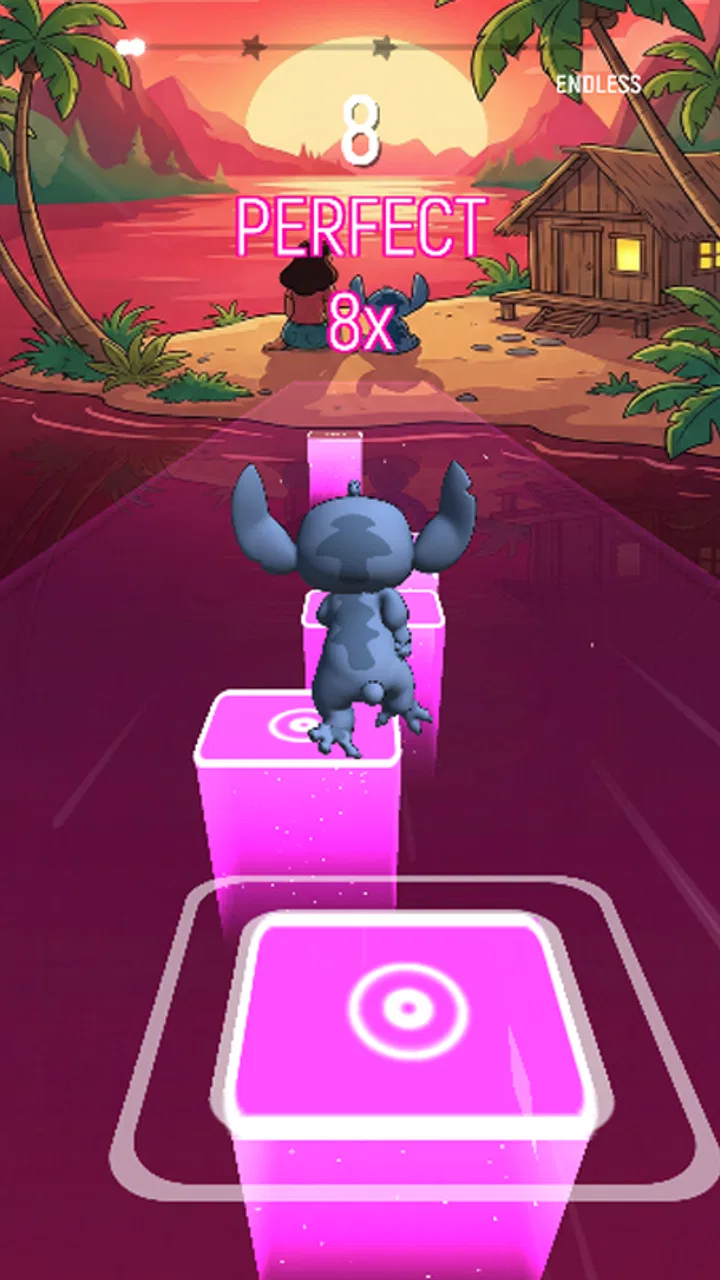
The game places the beat at the center of the experience. Rather than asking me to learn a complicated control scheme, it turns the screen into a visual timing exercise. The tiles provide the immediate instruction: watch their movement, listen to the rhythm, and react without losing the sequence. That creates a pleasant tension between looking and listening. If I focus only on the visuals, I can become late when the music changes pace; if I rely only on sound, I can miss what is happening on screen.
You May Also Like

 Blood Strike: 2.5 Anniversary
Blood Strike’s Loadouts Turn Every Drop Into a Tactical Gamble
A close look at Blood Strike’s custom loadouts: how fast access to signature weapons reshapes its battle royale rhythm, rewards preparation, and narrows the gap between fights.

 Pandora - Music & Podcasts
Pandora’s Music Is Easy to Start, but Harder to Recover
Pandora’s strength is its low-effort path from a seed to a station. Its weak spot is how much confidence it asks you to place in connection, setup, and quiet recovery.

 8 Ball Pool
 Is Built on Rivalries, Rematches, and Routine
A close look at the rivalries, rematches, shared routines, and unanswered safety questions that turn a quick pool match into a persistent mobile community.

 Samsung Music
’s Quiet Strength Is Playing What You Already Own
Its reach comes less from spectacle than from dependable access to a personal library. That simplicity is both the app’s strongest retention engine and its ceiling.

 AccuWeather: Weather Radar
AccuWeather Review: A Quick, Clear Forecast for Everyday Decisions
For everyday plans, the best forecast is the one you can understand quickly. AccuWeather makes rain timing, radar, and local conditions easy to act on, with a few trade-offs.

 Hill Climb Racing
Why Hill Climb Racing Still Turns Crashes Into One More Run
A tiny car, a bumpy hill and one more upgrade: Hill Climb Racing keeps resurfacing because its simple chaos makes every near-miss feel personal.
More From Our News Desk
View All News


That combination makes each attempt feel more active than a simple tap-to-score game. I am not just pressing whenever something appears. I am trying to anticipate the next beat, keep my hands relaxed, and avoid rushing because a previous successful tap made me overconfident. The blue alien helps soften the pressure. Its cute style gives the game a playful identity, so a mistake feels like part of a light arcade session instead of a harsh failure.
The most useful way to play is to treat the tiles as a rhythm guide, not as isolated targets. I found that watching the spacing between upcoming tiles was more helpful than staring at the current one. When the pattern became busier, preparing for the next movement reduced frantic tapping. This is a small adjustment, but it changes the game from pure reaction into a modest exercise in prediction.
The music-focused design also makes the game suitable for short breaks. I can imagine playing it while waiting for an appointment, taking a brief pause from work, or relaxing before bed when I want something more engaging than scrolling. A typical session does not need a large time commitment. I can start, concentrate on a run, and stop without feeling that I have abandoned a long mission or missed an important event.
Why the presentation matters
The blue alien is more than a decorative mascot. It gives the game a recognizable tone in a crowded field of tile-based rhythm titles. Many games in this category depend almost entirely on familiar music and bright effects to create personality. Here, the character helps make the experience feel friendlier and more suitable for younger players, while the Everyone age rating supports that broad appeal.
I also think the visual theme makes the game easier to recommend to families who want a simple music game rather than an intense competitive title. The concept is immediately understandable, and there is no need to explain a complicated fictional world before playing. That clarity is valuable on a shared device, where one person may hand the phone to another and expect them to understand the objective quickly.
Still, the visual charm should not be mistaken for a large amount of content. The alien and the tile action provide a consistent identity, but the game’s appeal depends heavily on whether the available musical challenges continue to feel enjoyable after repeated attempts. Players who need constant novelty may notice the narrow focus sooner than casual users.
Small techniques that improve a run
My first practical tip is to lower the pressure to play perfectly on the opening attempt. The early run is useful for learning how the tiles line up with the music and where the visual cues become less comfortable. Trying to set a personal best immediately can make me tap too early, especially when a sequence looks faster than it really is. A calmer first pass gives me information that makes the second attempt more controlled.
My second tip is to use a consistent grip. Holding the phone loosely with both hands can make repeated taps more precise than balancing it in one palm. This matters particularly when the action moves across the screen and I am tempted to chase each tile with a large finger movement. Smaller movements help me stay ready for the next cue and reduce the chance of covering part of the play area with my hand.
A third useful habit is to listen for the pulse before concentrating on score. If I begin by identifying the basic beat, the visual pattern becomes easier to interpret. This is especially helpful for players who normally react to images faster than sound. The game becomes less tiring when I stop treating every tile as a surprise and instead let the music establish a steady internal count.
These techniques reveal an interesting trade-off. The game is accessible because the rules are simple, but improving requires attention to timing, posture, and anticipation. It does not teach those skills through a formal lesson; the player discovers them by repeating a challenge and noticing why a run went wrong. That is a satisfying learning curve for casual play, although people who want detailed performance feedback may find it too understated.
Where it succeeds and where it falls short
One of the strongest parts of Beat Stitch Tiles Dance Music is its low barrier to entry. I do not need prior knowledge of rhythm games to understand what I am meant to do. The music gives the session energy, the tiles make the next action visible, and the character keeps the mood light. That combination makes it a natural choice for a quick introduction to the genre.
It is also a good fit for players who enjoy repetition with a purpose. The pleasure comes from recognizing a pattern, correcting a mistimed action, and gradually making a cleaner attempt. Someone who likes replaying a short arcade challenge until it feels smooth will probably get more from it than someone who expects every session to reveal a new mechanic.
The game’s free price makes that experimentation easier. I can try it without making a purchase decision first, which suits a casual title that may appeal strongly to one player and only mildly to another. It has reached over fifty thousand installs and holds a 4.3 average from around seventy ratings, so there is already a modest group of players engaging with it, while the rating count is still small enough that I would treat the score as an early impression rather than a definitive verdict.
Endev Studio keeps the concept focused, and that focus is both the attraction and the main weakness. Players looking for a broad music catalog, elaborate progression, online competition, or deep avatar systems should adjust their expectations. The game’s identity comes from its immediate tile-and-beat loop. If that loop does not feel satisfying within the first few sessions, extra play is unlikely to change the experience dramatically.
Another limitation is that rhythm games can be sensitive to the player’s surroundings and attention. In a noisy room, the music may be harder to follow, and a distracted player can blame the controls for mistakes that actually come from divided focus. I found it better suited to a quiet pause than to a crowded commute. That does not make it impractical, but it affects when the game feels most responsive and enjoyable.
Screen size can also influence comfort. On a larger phone, the tile patterns are easier to read and the tapping area feels less cramped. On a smaller display, I would pay closer attention to how I hold the device so that my fingers do not obscure upcoming cues. This is not a reason to avoid the game, but it is a useful consideration for anyone choosing between a phone and a larger mobile device.
The current version is 9, and the game runs on devices using Android 7.1 or newer. That broad compatibility makes it more approachable for people who do not own a recent phone. At the same time, older hardware can make any timing-based game feel less comfortable if performance is inconsistent. For the best experience, I would close demanding background apps before playing, particularly when accuracy matters more than a casual first try.
Who will enjoy it most
I see three especially good audiences for this game. The first is the casual player who wants a music game that can be understood in moments. The second is the fan of cute character design who prefers a friendly atmosphere over a serious competitive presentation. The third is the player who enjoys improving through repetition and does not need a large collection of modes to stay interested.
It can also work well as a shared, low-pressure game for families. Because the age rating is Everyone and the basic objective is visually clear, a parent or older sibling can explain it quickly. A realistic use case would be a child playing a short round while an adult waits nearby, then switching turns to compare who can keep the rhythm longer. I would still suggest that adults help younger players manage volume and screen time, as with any music-led game.
On the other hand, I would skip it if my priority were music discovery. This is not the same as using a streaming service or a dedicated rhythm game built around a large artist catalog. I would also choose another option if I wanted a structured training tool that explains timing accuracy in detail. Beat Stitch Tiles Dance Music encourages improvement through practice, but its appeal is more immediate and playful than instructional.
It may not satisfy players who need a strong sense of long-term progression. Some people play mobile games mainly to unlock equipment, build a collection, or follow a narrative. Here, the motivation is more personal: beat the challenge, improve the run, and enjoy the music while doing it. That is enough for a certain kind of player, but not for everyone.
How it compares with familiar alternatives
Compared with a traditional endless runner, this game asks for more listening and less route planning. I am not primarily steering around obstacles or collecting items across a large environment. The challenge is concentrated into timing, which makes the experience feel cleaner and more focused. If I want a quick mental reset without learning a map, the tile format has an advantage.
Compared with a deeper rhythm game, however, this title is intentionally lighter. A larger genre alternative may offer more songs, difficulty tiers, customization, or competitive systems. Those games can provide a stronger long-term hobby, but they may also demand more storage, more time, and a greater willingness to learn. The blue alien game is better when I want immediate play rather than a complete rhythm ecosystem.
It also differs from ordinary tap games because the music is not merely background decoration. The beat helps shape the player’s decisions. That makes the experience more memorable than tapping random targets, even though the underlying interaction remains simple. The trade-off is that the game’s success depends on how well the music and visual timing work together for each player.
My verdict after playing
Beat Stitch Tiles Dance Music succeeds because it understands what a small mobile rhythm game needs: a clear action, a friendly visual hook, and enough timing pressure to make another attempt tempting. The blue alien gives the experience a distinct face, while the tile patterns turn a few spare minutes into an active listening challenge. I enjoyed it most when I approached it as a compact arcade game rather than expecting a full music platform.
Its weaknesses are equally clear. The focused design may feel limited to players who want extensive content, detailed feedback, or a strong progression system. It is also at its best when I can concentrate and hear the beat, so it is not an ideal choice for every environment. Those are meaningful limitations, but they do not undermine the game’s purpose.
For a free music game from Endev Studio, I think the strongest recommendation goes to beginners, casual arcade fans, and anyone attracted to cheerful character-led presentation. I would tell a friend to try it when they want a simple rhythm challenge that starts quickly and rewards patience. I would steer a dedicated rhythm enthusiast toward a more expansive alternative if long-term variety is essential.
Overall, I see this as a pleasant, approachable choice for short sessions and gradual timing improvement. Its best quality is not complexity; it is the way it turns a straightforward tile mechanic into a small moment of musical focus. If that sounds like the kind of break you want, Beat Stitch Tiles Dance Music is worth trying. Just come to it for quick rhythm play, not for a massive game world.
FAQs for Beat Stitch Tiles Dance Music
01What is Beat Stitch Tiles Dance Music?
Beat Stitch Tiles Dance Music is a rhythm-based mobile game in which you tap musical tiles in time with the beat. The gameplay combines fast reactions, colorful visuals, and a selection of songs to create short, energetic sessions. It is designed for casual players, although later levels may require accurate timing and quick concentration.
02How do you play Beat Stitch Tiles Dance Music?
The main objective is to tap the correct tiles as they appear and follow the rhythm of the selected track. Missing tiles, tapping at the wrong time, or losing the musical flow can reduce your score or end a round. Beginners should start slowly, learn the visual patterns, and gradually improve timing before attempting faster songs and more challenging stages.
03Does Beat Stitch Tiles Dance Music require an internet connection?
Some features may work without a constant internet connection, particularly previously available songs or basic gameplay. However, an internet connection may be needed for downloading music, loading advertisements, synchronizing progress, receiving updates, or accessing online content. Availability can vary by device and version, so it is best to open the game online at least once after installation.
04Is Beat Stitch Tiles Dance Music free to download and play?
The game can generally be downloaded without an upfront purchase, but free access may include advertisements, optional purchases, or limits on certain songs and features. These extras can provide rewards, remove ads, or unlock additional content. Before confirming any transaction, review the purchase details carefully, especially if children use the device or shared payment methods are enabled.
05Is Beat Stitch Tiles Dance Music suitable for children and all devices?
The game is generally easy to understand and suitable for players who enjoy music and reflex challenges, but parents should check the store rating, permissions, advertising, and in-app purchase information before installation. Performance may differ depending on the phone or tablet, particularly on older devices. Headphones can improve the rhythm experience, although loud volume should be avoided.
Pros
- Catchy rhythm gameplay that is easy to learn but challenging to master.
- Wide selection of songs keeps sessions varied and entertaining.
- Bright tile effects make each successful move feel rewarding.
- Short levels are ideal for quick gaming breaks.
- Simple touch controls work well on both phones and tablets.
Cons
- Some songs or features may require in-app purchases to unlock.
- Fast sections can feel difficult on smaller screens.
- Ads may interrupt the experience between levels.
- Limited customization may disappoint players seeking deeper options.
- Performance can vary on older devices during intense visual effects.

Beat Stitch Tiles Dance Music
Gallery